Claims and variations
Mastering construction dayworks: best practices to save time and claim every hour
- Published
- Reading time
- 3 min read
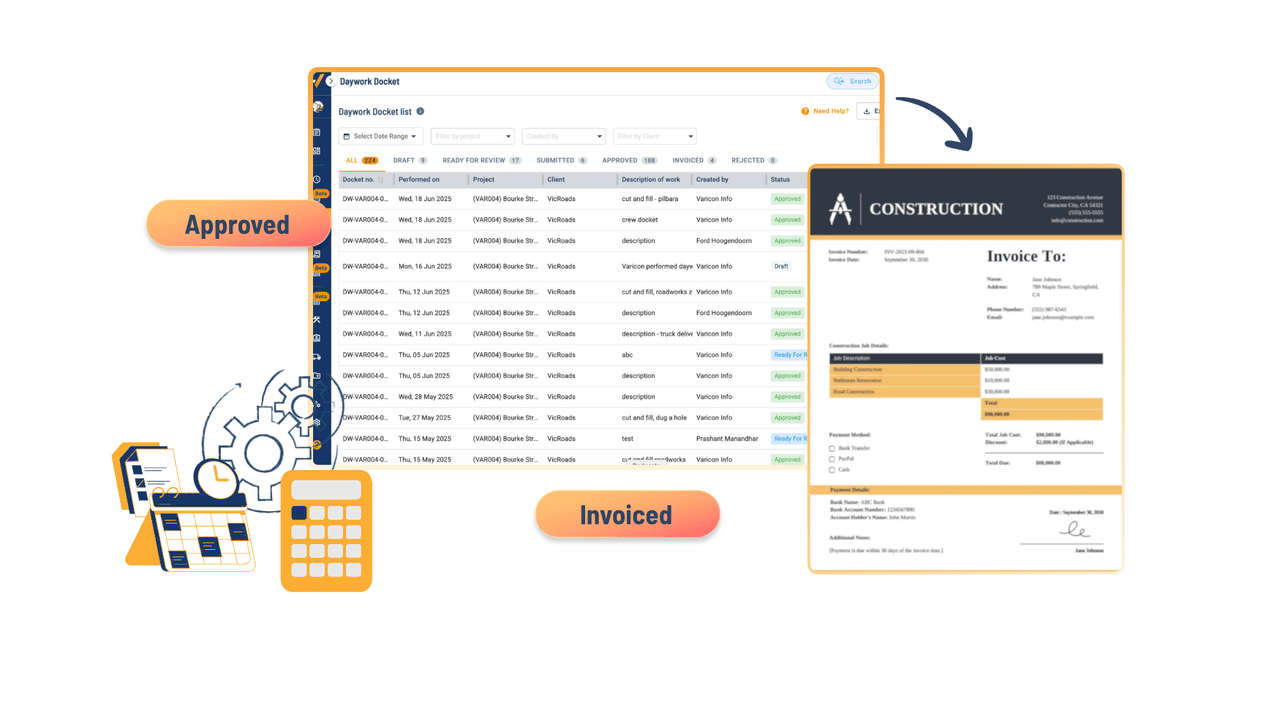
Managing dayworks takes up a lot of time for most civil contractors, whether you deliver whole projects on day rates or only variation works. It is not just the time. There is also a high risk of missed revenue and disputes with your client.
This article covers when dayworks are used, how to prepare for them and how to manage them day to day so you do not miss any claimable items.
Where and why dayworks are used
Dayworks make sense in several situations:
- As a subcontractor to a head contractor who carries responsibility for time and budget. The head contractor bears the risk of cost overruns. Margins are usually lower, but so are the risk and the management overhead.
- For variation works. For out-of-scope work on a variation, it is often easier for both parties to work on agreed dayworks rates.
- For emergency works. A burst water main under a road, a road collapse or repairs after an accident leave no time to prepare a priced quote.
- For small jobs. The effort of quoting is not worth it, so dayworks suit both parties. This is common under panel agreements for maintenance works.
Before you start dayworks
Your company may prefer dayworks, for lower risk and overhead, or priced work, for higher margins. Either way, it pays to be ready for dayworks. You will probably do some dayworks on priced jobs, and dayworks can fill gaps between jobs.
If you only think about dayworks when they come up, you will run into problems. Simple steps to take in advance:
- Work out your costs for day-rate work and your target margins. You still price each contract on market rates and how much you want the work, but this groundwork lets you respond much faster.
- Have a way to record dayworks. Paper or digital.
- Train your crew. Make sure they understand how important it is to fill in dayworks dockets on time, get them approved and get them back to the office.
- Set up internal workflows that work. Without them, the risk of missing claimable dayworks is high.
Managing dayworks day to day
In many ways dayworks are simpler to manage than priced work, but they add record keeping your site team has to stay on top of. Tips for the day to day:
- If you can, have the site supervisor fill in one dayworks docket for the whole crew. That means fewer dockets and less reliance on each operator getting their docket right.
- Agree with the client’s representative and your crew how and when dockets are approved. Will the client rep approve on the day, the next day or weekly in a batch? On site or by email?
- Most important of all, build the habit of filling in dockets as the work is done. If your crew is not used to dayworks, this needs vigilance and regular reminders early on. Do not assume the habit is set after a few weeks. In reality it will probably take months.
Turning dayworks into money in the bank
What matters in the end is money in your bank account. The more organised your dayworks are, and the easier it is for your client to check that their representative approved them, the faster you get paid.
Tips:
- Keep all your dayworks dockets well organised.
- Use a reliable way of calculating your claim that keeps human error to a minimum.
- Present your claim so your client can easily check any dayworks item against the original signed docket.
- Submit your dayworks claim on time, and make sure it meets every requirement your client has set.
Following these steps cuts your costs, helps you claim every item you are owed and shows your clients you are a professional, organised partner.
You can do all of this with tools you already use, like Excel, if you put in the time and stay diligent every day. If you do not have the time, or you struggle to keep everything organised, see how Varicon dayworks dockets work, or book a demo.
You can also start with our free construction dayworks docket template.