Software and technology
Implementing onsite technology in construction: a quick guide
- Published
- Updated
- Reading time
- 2 min read
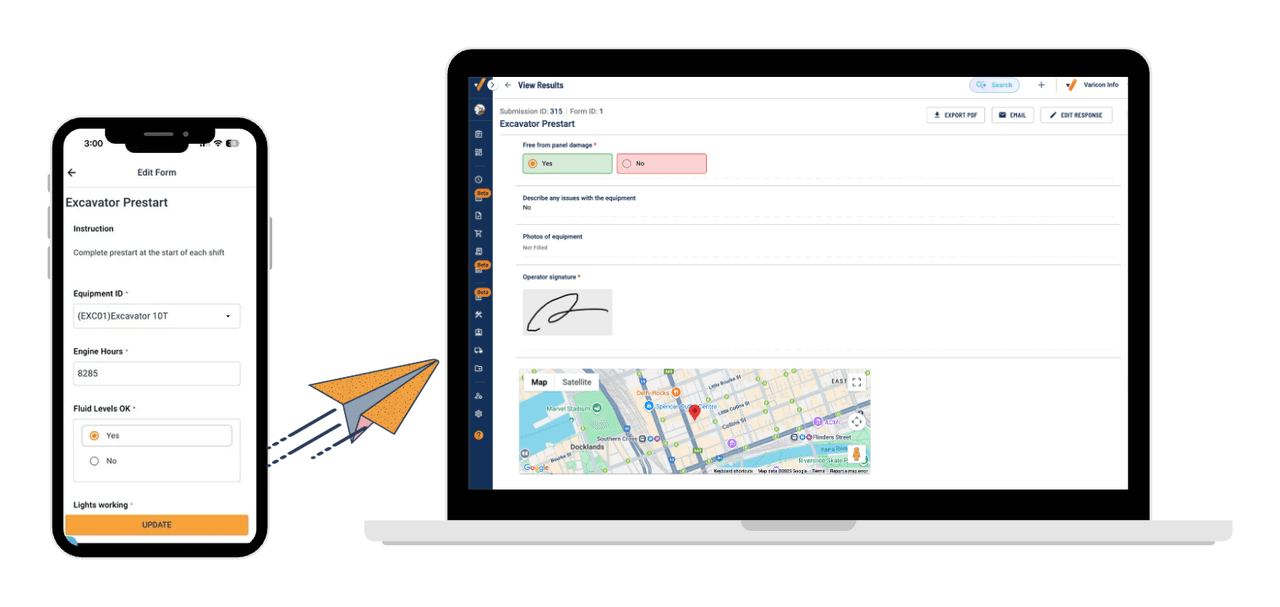
Civil construction has been slow to adopt technology compared with other industries.
That has created a vicious cycle. Low investment in technology means little or no improvement in productivity. Low productivity means low margins. Low margins mean less money to invest in technology.
There are understandable reasons for holding back. The top two are low levels of technology skills across much of the construction workforce, and a track record of construction software that did not deliver.
Why invest in technology
The tide is turning, and the contractors who wait will be left behind. As early adopters improve their productivity, they can run on a lower cost base and keep healthy margins at lower prices. As many other industries have shown, that forces late adopters onto thinner margins, or out of profit altogether.
Productivity is not the only reason. Just as important is knowing how your business is really performing. If you cannot see how costs are tracking against budget, you cannot respond early to problems, and you will have little confidence when you price new work. On thin margins, it is very easy to get it wrong and lose money on a civil job.
What to do about it
There are some simple steps to make sure you choose the right tools and roll them out well.
- Be clear about the problem. Work out exactly which problems you are trying to solve. If it is cost management, find out what is inefficient today, where you lack visibility and what risks the business carries. Clarity on the problem stops you chasing the next shiny thing.
- Make sure your team can use it. If your crew are “fat-fingered” construction folk, like many of our customers, you either need to hire more technical staff or choose a tool that keeps things simple enough for them to use.
- Work with people who know your industry. A rollout succeeds when it fits the people who have to use the system. The best help comes from people who understand civil construction.
- Do not try to do everything at once. The best rollouts move at a pace that does not overwhelm your people. Start with simple processes that are easy to move across and save real time. Build the habit, then move on to the next step. Before long, your people will be working a new way, saving time and giving you the information you need.
- Do not be the last to change. Some contractors think change is risky. The real risk is standing still while others move ahead. Follow steps 1 to 4 to pick the right tools for your team, and you will set yourself up to stay competitive.
Where to from here
Varicon’s founder, James Baker, came from the civil construction industry. He struggled with the same cost management problems all civil contractors face: disconnects between site and office, cost overruns, no clear view of actual costs, and slow data capture on paper forms and Excel sheets.
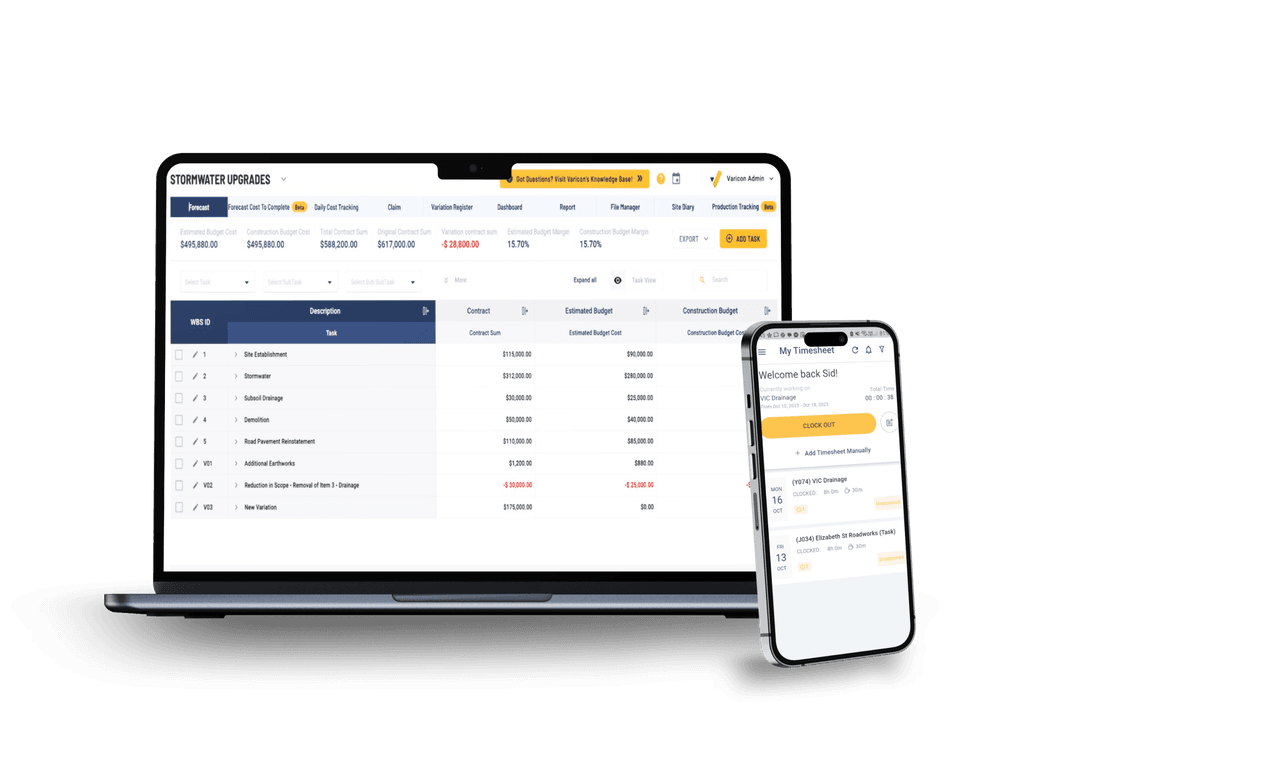
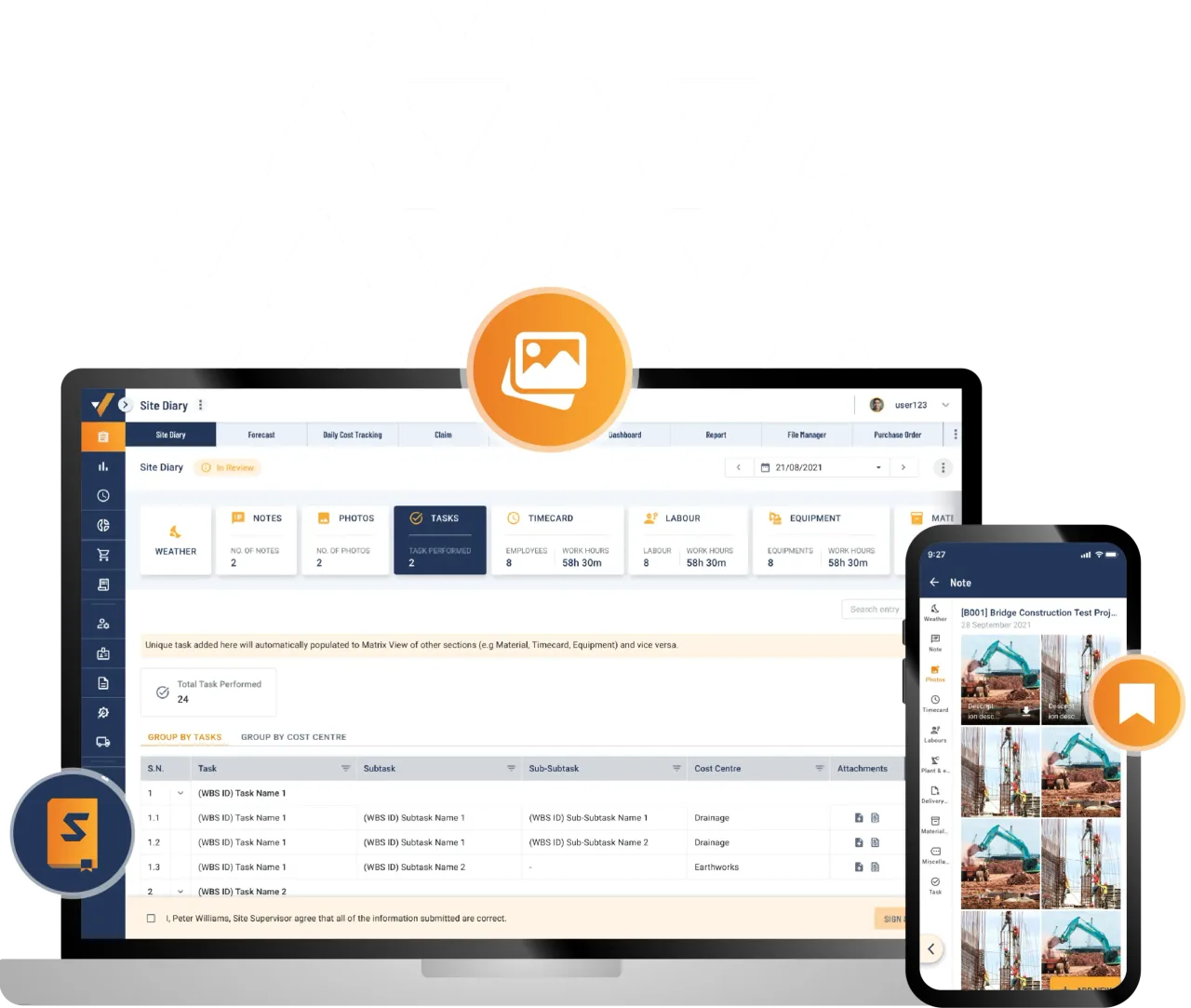
Varicon is built for small to medium civil contractors. It is designed to save you time, simplify work on site and in the office, and help you find and deal with cost overruns early.
To learn more, book a demo.