Software and technology
Navigating change: rolling out new construction management software in a civil company
- Published
- Updated
- Reading time
- 4 min read

Why change is worth it
Construction is changing as new technology comes into the industry. Adopting it well can help a civil company grow. Deloitte estimates that businesses can expect to increase revenue by 0.58 percentage points each year if they use additional technologies.
But change is hard, especially in a construction company where people have very different levels of comfort with technology. Staff reluctance to change is one of the biggest obstacles to new technology in construction. The hardest part is often getting everyone on board, including field staff who are not tech-savvy.
This article walks through Kotter’s 8-step change model, a proven approach to managing change, applied to rolling out new construction management software.
The eight steps are:
- Create a sense of urgency
- Build a guiding coalition
- Create a vision for change
- Communicate the vision
- Empower action
- Create short-term wins
- Consolidate gains and produce more change
- Anchor the changes in your culture
1. Create a sense of urgency
The first step is making it clear why change is needed now. Explain why the business needs new software, in light of industry trends and competition. Spell out the benefits, such as less admin, lower costs and better project outcomes. Make it clear that adopting the right technology matters for the business’s long-term success.
2. Build a guiding coalition
Bring together a group that includes decision-makers, project managers, supervisors and field workers, and other people with influence, such as someone from finance or payroll. Good change leaders can be found anywhere in your business, not only at the top. This group should be united in driving the change. Their support will be crucial to winning over everyone else.
3. Create a vision for change
Explain how the future will differ from the past, and how each step of the rollout gets you there. Describe clearly how the new software will change the way your jobs run.
At Varicon, we build a “Success Canvas” with each customer. It sets out the current state of the business and the future state once Varicon is in use.
4. Communicate the vision
Good communication is essential to any change. Use every channel you have to reach everyone, especially the people on the front line. Repeat the vision and the plan often. According to a McKinsey study on organisational transformation, businesses with effective change management engage and communicate with frontline workers more often than other organisations.
5. Empower action
Encourage your people, including field staff, to take part. Remove whatever slows them down.
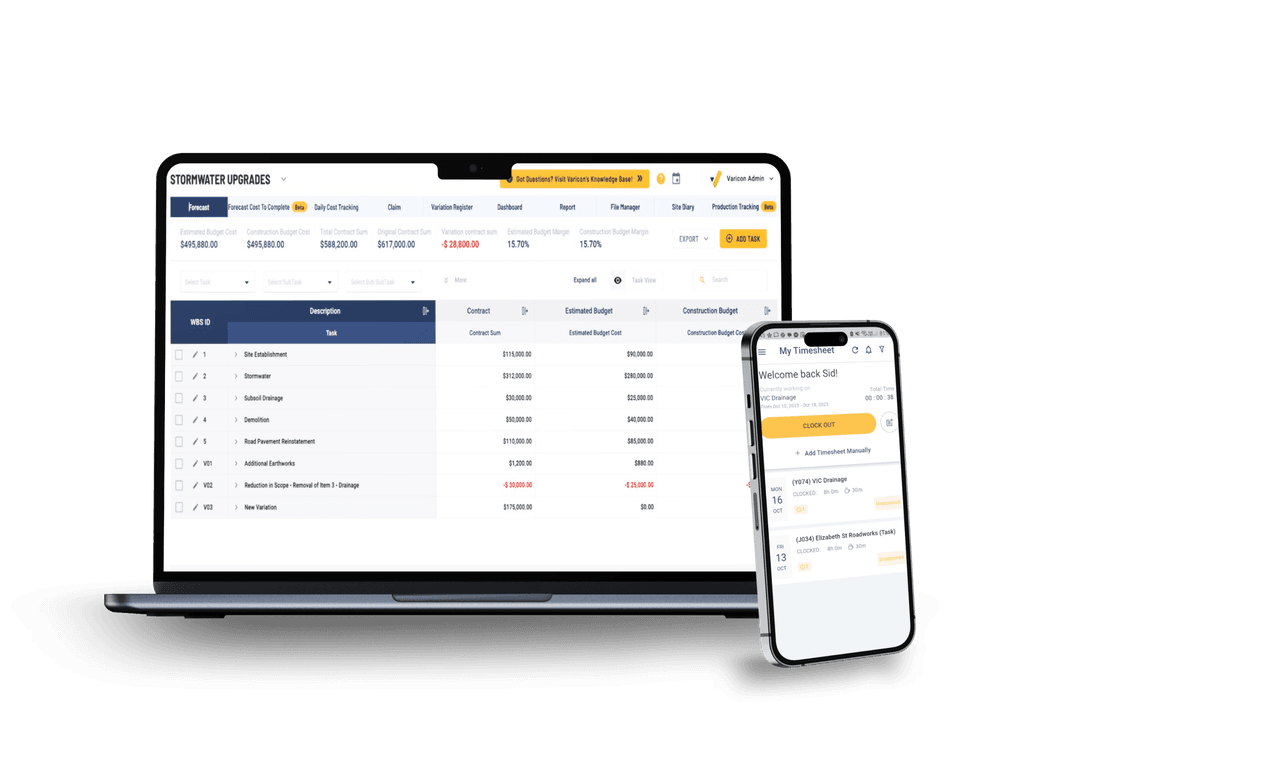
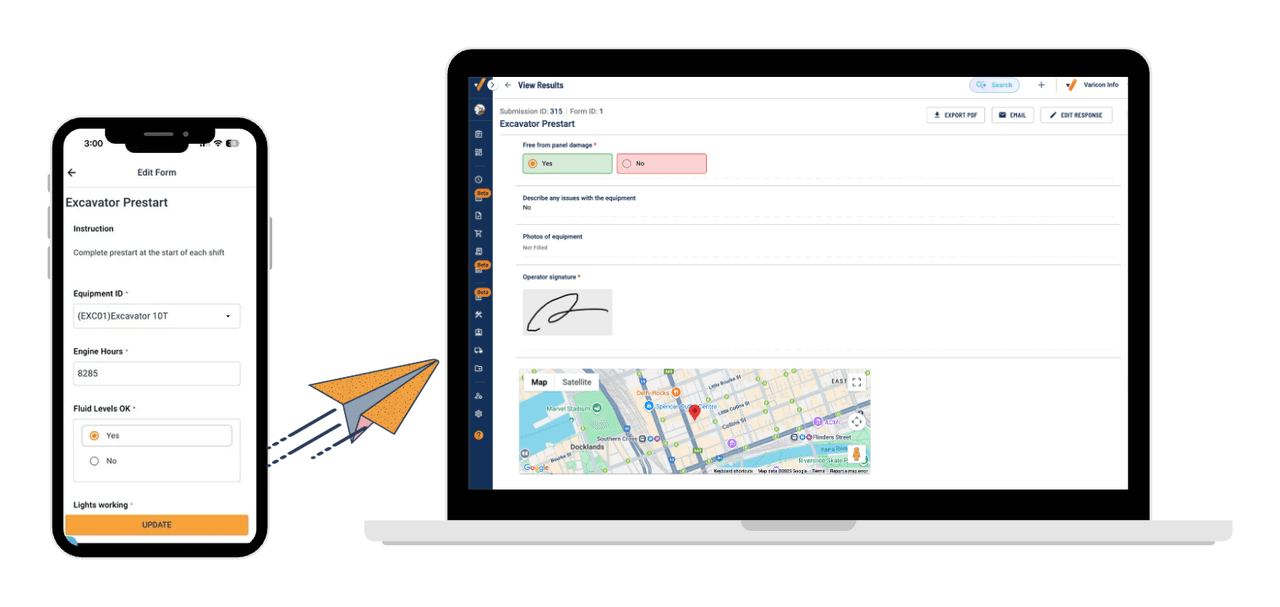
Give field staff special attention, because they may be less familiar with the technology. When we built Varicon, we put field workers first, with a fat-finger friendly design that keeps screens simple for the crew. Make sure everyone is comfortable with the new tools, such as a mobile timesheet app. Training and hands-on help during the rollout build confidence and close the gap.
6. Create short-term wins
Aim for some quick wins. Start with a smaller project or a pilot where the new tool can show its value.
At Varicon, we roll out in stages, usually starting with timesheets, so you see value early. Celebrate those wins to build enthusiasm. For example, Collective Civil reduced their payroll admin time by over 50% after moving to Varicon’s mobile timekeeping and payroll workflow.
7. Consolidate gains and produce more change
Kotter warns that declaring victory too early is one reason many change projects fail. Lasting change takes more than quick wins. Build on your early successes and expand the new tools to more jobs and more uses over time.
At Varicon, we gather feedback from users and improve the product based on it.
8. Anchor the changes in your culture
The new way of working needs to become part of your culture and your standard processes. McKinsey’s research found that companies with successful transformations are more likely to build transformation practices into “business as usual”.
To make the change last, recognise and reward the people who embrace the new tools and help others adopt them. Encourage continuous learning.
The bottom line
With a deliberate approach to change, civil companies can reinvent how they work and gain a lasting advantage. Involve people at every level, and build a culture that adapts. Change is a journey, but done well, new technology can help your business succeed.
If you are thinking about new software, our guide to choosing construction software can help, or book a demo to talk through a rollout with us.