Purchasing and suppliers
Best practices for managing suppliers in civil construction
- Published
- Updated
- Reading time
- 2 min read
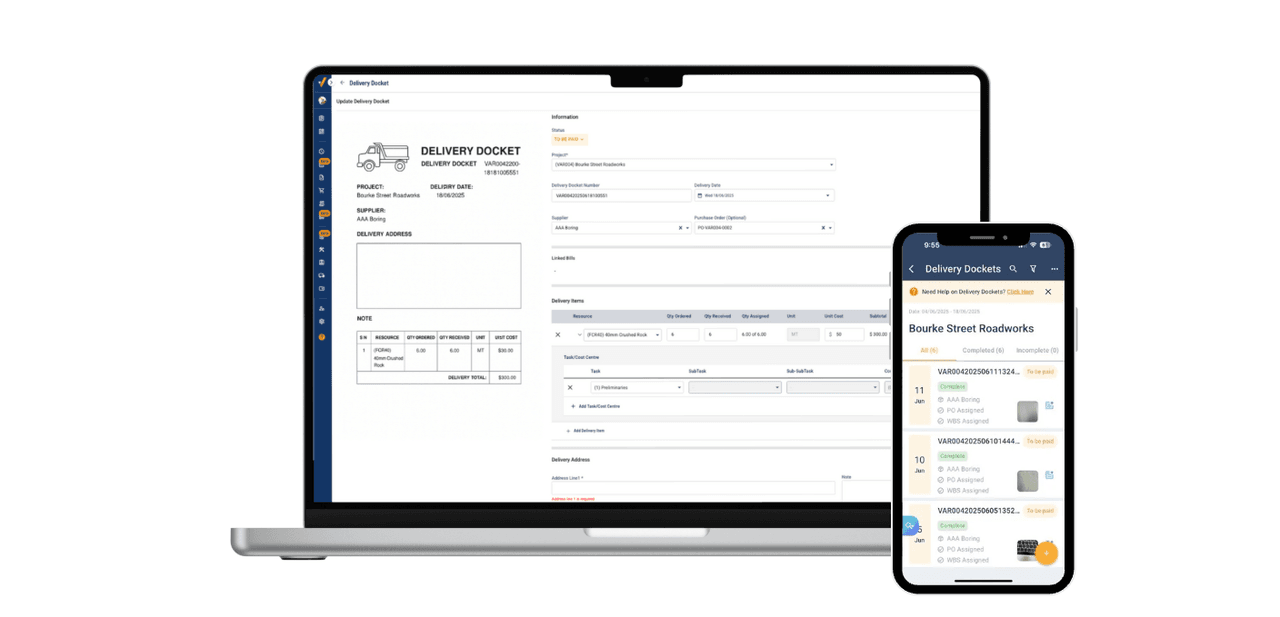
Managing suppliers well is crucial to a successful civil project. Here are four practices that help you keep costs in check and relationships strong.
What goes wrong when suppliers are not managed
Poor supplier management hits both the program and the budget:
- Higher costs. Without proper management, you can pay more than you need to. A good process makes sure you get the best price and are not overcharged.
- Legal disputes. Vague or poorly structured supply arrangements lead to misunderstandings and disputes, which can escalate to legal action. That costs time and money, and harms your reputation.
- Damage to your reputation. Repeated supplier problems make it harder to win future contracts and keep your clients’ trust.
1. Put proper supply agreements in place
A good supplier relationship starts with a clear supply agreement. It should set out the terms and conditions, including delivery schedules, payment terms, quality standards and each party’s responsibilities.
Proper supply agreements protect both parties and make misunderstandings and disputes less likely. They also set expectations from the start.
Supply agreements do not need to be complicated. In most cases, the simpler and clearer, the better. Usually your standard purchase terms, plus any specific requirements and specifications for the order, are enough.
2. Run a sound procurement process
A proper procurement process makes sure every purchase is necessary, justified and approved at the right level. A structured process helps you:
- standardise how you buy, so suppliers are chosen consistently
- set clear approval levels, which prevent unauthorised purchases and make people accountable
- manage costs, by negotiating better terms and prices with suppliers.
A purchase order process is the simplest place to start.
3. Check supplier invoices
A common mistake is assuming every invoice is correct. To avoid overpayments and errors, keep detailed records of every transaction and delivery. A checking process means:
- Keep accurate records. Keep purchase orders, delivery dockets and other documents organised and easy to find.
- Check regularly. Check supplier invoices against delivery records to find discrepancies.
- Use software. Let software match invoices to purchase orders and deliveries, so there is less room for human error. This is called a three-way match.
4. Keep the records you need for disputes
If a dispute comes up, complete and organised records make a big difference. The more you keep, the better placed you are to resolve it. Keep:
- Delivery dockets. Make sure every delivery comes with a signed docket confirming the quantity and quality of what arrived.
- Supervisor comments. Record anything the job supervisor notices about a supplier’s performance.
- Photos and site diaries. Photos and a detailed site diary add context and support if there is a disagreement.
- Communication records. Keep emails, meeting minutes and phone call notes with suppliers.
In short
Good supplier management underpins a successful civil project. Clear supply agreements, a sound procurement process, checked invoices and thorough records build strong supplier relationships and reduce your risk.
It does not need to be complicated or time-consuming. With a well-designed system, you avoid these pitfalls without creating extra work for your team.
See how Varicon matches purchase orders, delivery dockets and supplier bills, or book a demo to talk through your supplier process.